In Longwood, I’ve learned that “every 30–90 days” is more of a starting point than a rule—because humidity changes what your filter is dealing with. When the air stays sticky, filters don’t just catch dust and pollen; they can also hang onto that damp, gritty mix that builds up quicker and starts choking airflow. That’s usually when homeowners notice the telltale combo: rooms that feel clammy, longer cooling cycles, a slight musty smell at the vents, or a sudden bump in the power bill.
This page gives you a Longwood-specific filter change playbook, not a generic calendar reminder. You’ll get practical guidance based on what actually speeds up filter loading here—heavy summer run time, afternoon storms, pets, higher-MERV filters, and allergy seasons—plus quick “at-a-glance” cues to tell when your filter is truly due. The goal is simple: cleaner air, steadier comfort, and fewer avoidable AC problems in a climate that’s tough on HVAC systems.
TL;DR Quick Answer
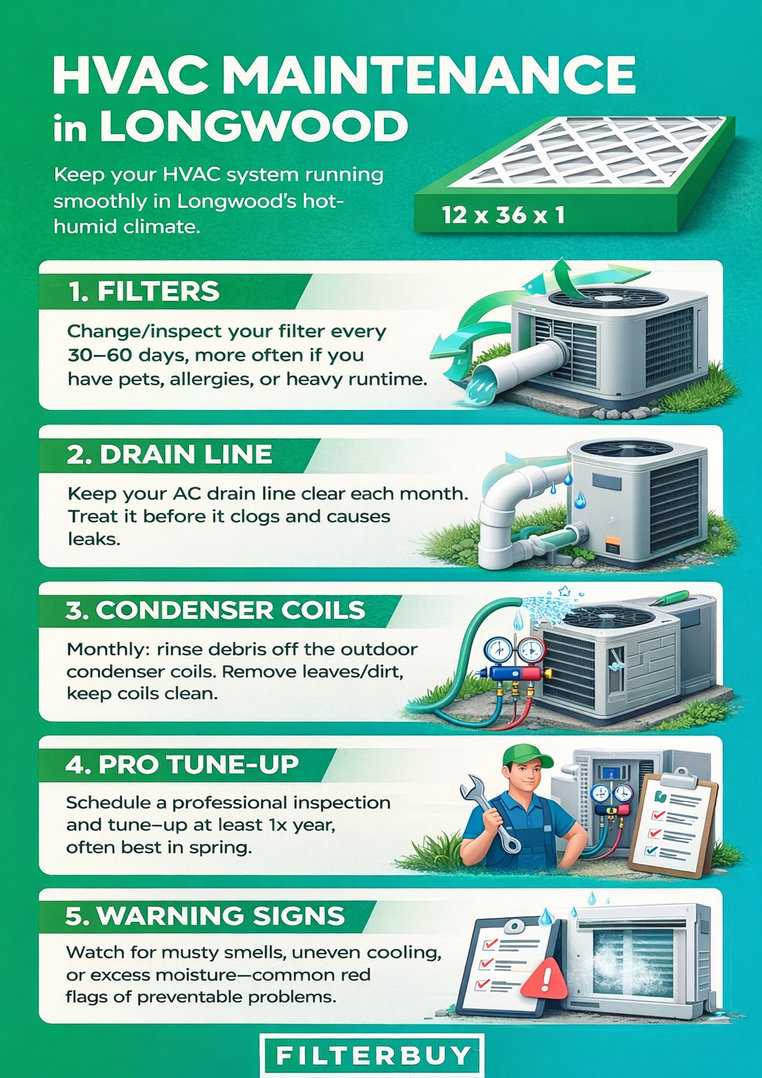
Plan on 2 tune-ups per year: one in spring (before peak heat/humidity) and one in fall (after heavy runtime).
Change your AC filter every 30–60 days during high-use humid months (sooner with pets/allergies). Use the light test: if it doesn’t “breathe,” replace it.
Humidity makes drain lines and coils non-negotiable: ask for a condensate drain inspection/flush and evaporator coil check to prevent clogs, musty odors, and uneven cooling.
Demand an airflow + performance check: confirm temperature split, static pressure, and refrigerant charge (when applicable). Good maintenance measures results—not guesses.
Verify licensing + rebates before major work: confirm contractor credentials and check local/state/utility incentives to avoid surprises and cut costs.
Top Takeaways
Change filters more often in Longwood humidity.
Aim for 30–60 days in peak season. Use the light test monthly.Protect airflow to protect comfort + efficiency.
Loaded/restrictive filters = longer runtimes, higher bills, less dehumidification.Moisture-related maintenance is non-negotiable.
Prioritize drain line check/flush, coil checks, and airflow verification.Your home sets the schedule.
Pets, allergies, filter thickness, and MERV change how fast filters load.
Verify Florida licensing, confirm permits for major work, and check rebates before replacements.
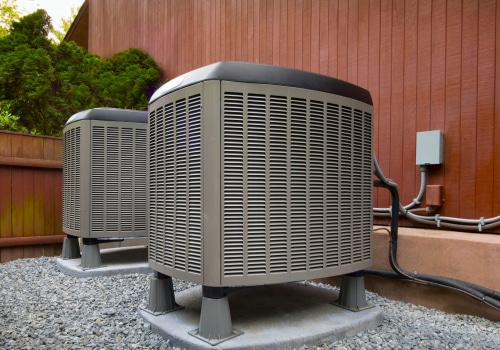
Longwood’s humid weather keeps AC systems running hard for long stretches of the year—and that heavy runtime is the #1 reason filters in Central Florida often need changing sooner than the “one-size-fits-all” advice you see online. A clean filter protects airflow (and your blower motor), helps your system remove moisture more effectively, and keeps indoor air from feeling stale or musty.
A practical filter-change schedule for Longwood homes
Use this as a starting point, then adjust based on what you see on your filter.
Every 30 days:
Homes with pets, allergies/asthma, heavy occupancy, frequent door/window use, or anyone doing renovation/DIY projects.Every 45–60 days:
Most typical households using a 1-inch filter with normal activity and no major triggers.Every 60–90 days:
Homes with no pets, low occupancy, and a thicker filter (2–4 inches)—especially if you keep windows closed and have good housekeeping habits.
Longwood-specific reality check: during peak cooling season (late spring through early fall), many households land closer to 30–60 days simply because the system runs longer and pulls more air—and more particles—through the filter.
What changes your “right” interval
A filter’s lifespan isn’t just about days on the calendar—it’s about what’s moving through it.
Filter thickness: 2–4 inch filters typically hold more debris and last longer than 1-inch filters.
MERV rating: Higher MERV can capture finer particles, but may load faster (and if the system isn’t designed for it, can restrict airflow).
Pets & allergies: Dander, hair, and higher filtration needs shorten intervals.
Humidity + runtime: More AC hours = more air passing through the filter = faster loading.
Nearby construction / dusty roads / lots of landscaping: More airborne debris means quicker clogging.
Quick signs it’s time to change your AC filter
If you’re unsure, these clues usually show up before performance problems do:
The filter looks gray or matted, especially along the intake side
Weak airflow from vents or rooms cooling unevenly
The system runs longer to hit the thermostat setting
Musty or “dirty sock” odors when the AC starts
The 20-second check (the best habit you can build)
Once a month, slide the filter out and hold it up to a light:
If light barely passes through or the pleats look packed, replace it.
If it’s lightly dusty but still breathable, you can usually go a bit longer—then recheck in 2–3 weeks during heavy-use months.
Small tips that make filters last longer (without sacrificing air quality)
Keep return vents clear (no furniture blocking them).
Vacuum around returns periodically—dust there ends up in the filter.
If you’re upgrading to a higher MERV, make sure your system can handle it; if airflow drops, your filter may be “too restrictive” for your setup.
Bottom line
For most Longwood homes, changing your AC filter every 30–60 days during humid, high-runtime months is a solid target, with 60–90 days possible in low-impact households using thicker filters. If you want the most accurate schedule, rely on the monthly light test and your home’s real-world conditions—not a generic rule.
Essential Resources
ENERGY STAR HVAC Maintenance Checklist — Know What a Proper Tune-Up Should Cover
A clear, step-by-step checklist for routine HVAC care (filters, coils, airflow, and seasonal upkeep) so you can spot gaps and keep your system running efficiently.
https://www.energystar.gov/saveathome/heating-cooling/maintenance-checklist
Florida DBPR License Lookup — Verify Your HVAC Contractor Is Licensed in Florida
Before scheduling service, confirm a contractor’s license status to reduce the risk of unqualified work, liability issues, or warranty complications.
https://www.myfloridalicense.com/wl11.asp
Seminole County Building Division — Understand Permits for Replacements and Major HVAC Work
If you’re replacing equipment or making major system changes, this helps you check permitting and inspection requirements so the work stays compliant and resale-friendly.
https://www.seminolecountyfl.gov/departments-services/development-services/building/
Duke Energy Florida HVAC Rebates — Lower Upgrade Costs With Utility Incentives
If you’re considering a high-efficiency upgrade, rebates can reduce upfront costs and improve ROI—this is where to start for current utility programs.
https://www.duke-energy.com/Home/Products/Home-Energy-Improvement/HVAC-Replacement?jur=FL01
Florida Energy Rebates (FDACS) — Find State Programs That May Add Extra Savings
A central place to review statewide energy-efficiency programs and rebates that may apply to HVAC upgrades or related home improvements.
https://www.fdacs.gov/Consumer-Resources/Florida-Energy-Rebates
EPA Mold & Moisture Guide — Connect Humidity Control to Better HVAC Performance
Longwood’s humidity can magnify moisture issues. This guide explains how moisture contributes to mold risk and what homeowners can do to prevent it.
https://www.epa.gov/mold/brief-guide-mold-moisture-and-your-home
Florida Department of Health Mold Guidance — Get Florida-Specific Indoor Air Recommendations
Practical guidance tailored to Florida’s climate, including prevention-focused tips that support healthier indoor air and smarter maintenance decisions.
https://www.floridahealth.gov/community-environmental-public-health/environmental-public-health/air-quality/mold/
Supporting Statistics
HVAC impact on energy bills
In Longwood, I see “minor airflow issues” turn into longer runtimes fast during humid months.
Stat: Heating and cooling make up nearly half of a typical home’s energy use.
Source: https://www.energystar.gov/saveathome/heating-cooling
Why indoor air quality is a big deal
Most of your day-to-day exposure happens inside your home.
Stat: People spend about 90% of their time indoors.
Stat: Some indoor pollutant levels can be 2–5× higher than typical outdoor levels.
Source: https://www.epa.gov/report-environment/indoor-air-quality
Humidity + dampness risks
The “musty” or “clammy” comfort complaints I hear locally often point back to moisture management.
Stat: Indoor dampness or mold is associated with roughly ~30% to 70% increases across multiple respiratory/allergic outcomes (per meta-analyses summarized by LBNL).
Source: https://iaqscience.lbl.gov/dampness-related-health-risks
Final Thought & Opinion
Longwood humidity pushes AC systems harder—cooling and dehumidifying for long stretches. That’s why filter timing matters: a loaded filter restricts airflow, lengthens runtimes, and can invite musty comfort issues.
The key takeaway
Most Longwood homes do best with 30–60 day filter changes during high-use months.
Then adjust based on filter thickness, MERV rating, pets, allergies, and runtime.
Use the monthly “light test” to confirm when it’s truly time.
My opinion (from what I’ve seen in humid-climate homes)
Stop treating filter changes like a calendar reminder.
Treat them like a performance check—humidity makes small restrictions matter more.Check monthly. Replace the moment it stops breathing.
If light barely passes through the filter media, it’s done.Don’t over-filter beyond what your system can handle.
A higher MERV isn’t always “better” if it chokes airflow.
Bottom line
A slightly more frequent, system-appropriate filter change usually costs less than:
higher energy use from longer runtimes
comfort issues tied to poor airflow and moisture control
FAQ on “HVAC Maintenance in Longwood”
Q: How often should I schedule HVAC maintenance in Longwood?
A:Twice per year minimum: Spring + Fall.
From what I see in humid climates, this catches issues before they snowball.
Consider a mid-summer check for older systems or heavy runtime.
Q: How often should I change my AC filter in Longwood?
A:Typical range: every 30–60 days in peak season.
My go-to rule: monthly light test. If it won’t “breathe,” replace it.
Pets/allergies: often closer to 30 days.
Q: What should a proper maintenance visit include in humid Florida?
A:Moisture + airflow first:
Condensate drain check/flush
Coil inspection
Airflow/static pressure check
Plus: electrical safety checks and refrigerant evaluation (as appropriate).
If they skip the drain, I consider it incomplete for Longwood humidity.
Q: What signs mean I need maintenance (not just a filter change)?
A:Common “red flags” I see:
Weak airflow
Clammy rooms
Long runtimes
Musty odor at startup
Water near the indoor unit
Uneven cooling
Q: Do I need a permit for HVAC work in Longwood?
A:Maintenance: usually no.
Replacements/major changes: often yes.
Action steps:
Check Seminole County requirements
Verify Florida licensing before work begins
Learn more about HVAC Care from one of our HVAC solutions branches…
Filterbuy HVAC Solutions - Miami FL - Air Conditioning Service
1300 S Miami Ave Apt 4806 Miami FL 33130
(305) 306-5027
Filterbuy HVAC Solutions - Miami FL - Air Conditioning Service